


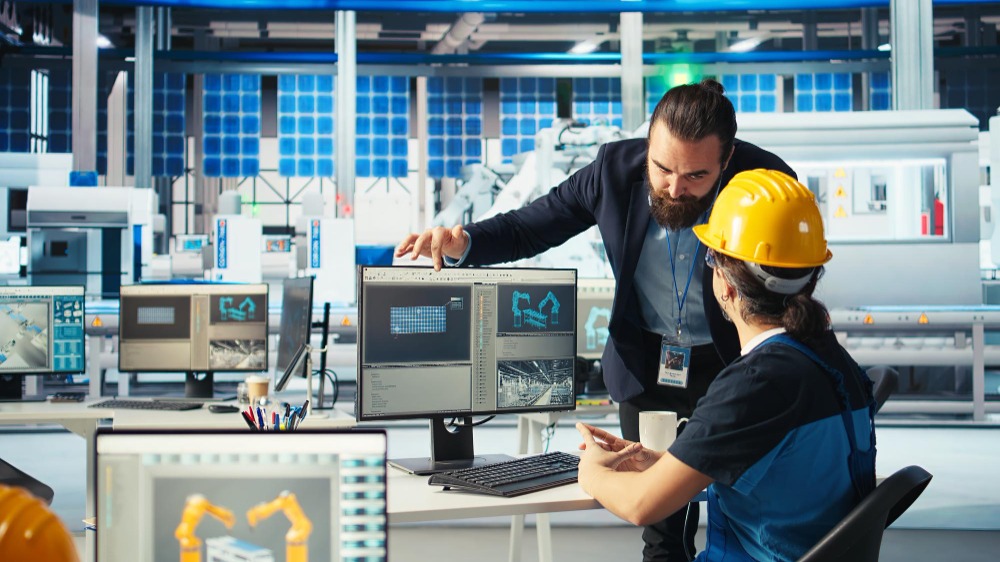

A useful digital twin does not have to be a complex 3D representation. In many projects, the real value is a functional replica of the important states and variables: consumption, temperatures, pressures, alarms, running hours and trends.
We configure histories, alarms and visualizations to detect deviations, compare periods and understand what happened before an incident. This can reduce diagnosis time.
Depending on the project, we use PLCs, industrial networks, open protocols, gateways, APIs and databases while considering criticality, network availability, cybersecurity and remote-access requirements.
A full digital twin is not always required. Sometimes an energy dashboard is enough; in other cases alarms, historical data and process states provide the real value.
Depending on available sensors and equipment, monitoring can include electricity consumption, solar production, temperatures, alarms, running hours and process variables.
The level of detail depends on your objective. An energy dashboard or a set of alarms and histories may be sufficient for the first stage.
We review the available signals, protocols and connection options before defining the integration. Compatibility is assessed for each project.
They help compare periods, identify deviations and review the sequence of events before an incident, supporting diagnosis and maintenance decisions.
Network availability, cybersecurity, system criticality and access requirements are considered when defining the solution. Remote access is agreed as part of the project scope.
Tell us which installation you want to monitor, what information is available and which problem you want to solve. We assess a practical starting scope.
Monitoring connects equipment data with the information needed for operation and maintenance. We define the signals, histories and visualizations around the objectives of each installation.
We use necessary cookies to remember your choices. With your consent, we use Burst Statistics to measure website usage and load Google Maps, which connects to Google. You can accept, reject optional cookies or choose your preferences, and change your decision at any time.
WhatsApp us